
2026 Conference & AGM
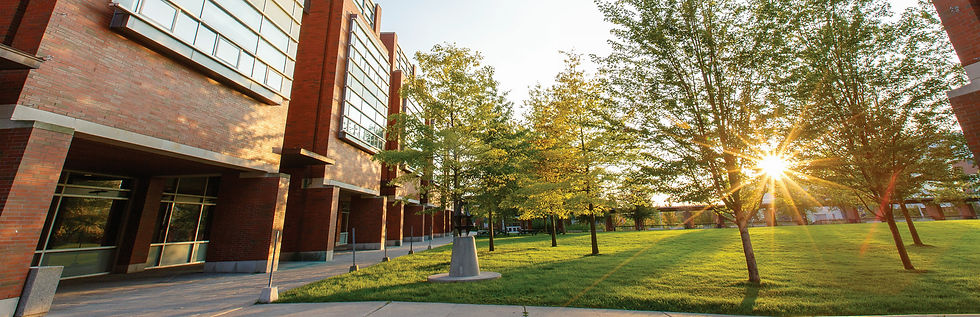
Ontario Tech University | Oshawa, ON
June 8-9, 2026

2026 SPONSORS
This conference would not be possible without the generous support of our sponsors. Click on the images below to view the sponsor websites. Interested in becoming a sponsor? View our sponsor package or contact us at info@laurentiansetac.ca for more information.
Gold Sponsors




Silver Sponsors


Bronze Sponsors


SHORT COURSES
Toxicology Career Development & Mentoring
Calling all students and early career toxicologists! This short course will provide an overview on career paths in environmental toxicology. Participants will learn tips and tricks for resume/CV preparation, job applications, interviews, and networking, with advice coming from all different sectors. In addition, participants will have an opportunity to network in small groups with mentors from industry, consulting, government, and academia, so you can get all of your questions answered. Participants will also be prioritized to join a new L-SETAC mentorship program beginning later in 2026.
Monday, June 8 | 09:00 - 12:00
Students 20$ | Regular 40$


Slippery Science: Fish Mucus Proteomics
Dr. Denina Simmons, Ontario Tech University
Join the Aquatic Omics Lab for a short course on fish mucus proteome sampling and data analysis. The proteome in fish mucus offers an opportunity to conduct environmental monitoring and fish health assessment in a non-invasive manner, reducing our impact on valued wildlife. This 3-hour session will encompass the theoretical foundations, methodologies, and practical applications of non-lethal fish mucus analysis. Participants will begin with an introductory lecture by Dr. Denina Simmons on the purpose and utility of mucus proteomics, followed by an overview of sample collection and processing procedures. Subsequently, attendees will be divided into two groups: one group will remain in the classroom to learn about data collection, filtering, and analysis utilizing a sample dataset, while the other will visit the aquatics facility to collect mucus from Fathead Minnow (Pimephales promelas) and practice sedation, handling, and collection techniques under the supervision and guidance of members of the Aquatic Omics Lab. The two groups will rotate part-way, giving all participants the opportunity to engage in both activities. All work will be conducted under an Ontario Tech Animal Care Committee-approved teaching Animal Use Protocol. Participants will gain new knowledge and experience and leave with their own copy of our protocols and a certificate of participation.
Monday, June 8 | 13:00 - 16:00
Students 20$ | Regular 40$
PUB NIGHT
It’s Not Just Another Stressor: Why Radioactive Parameters Don’t Play by the Same Rules
Dr. Rebecca Peters, CanNorth Environmental Services
In environmental risk assessments of nuclear facilities (power plants and processing facilities) and in the uranium industry radionuclides (radioactive parameters) need to be considered alongside conventional chemical stressors, but they do not always fit comfortably within the same assessment framework. Whereas metals, nutrients, and organic contaminants are typically evaluated using concentration-based benchmarks and toxicity thresholds, radionuclides are evaluated through a radiological dose which requires additional consideration of radioactive decay, daughter products, exposure geometry, bioaccumulation, and dosimetry.
This presentation will introduce key differences in how radionuclides are assessed in environmental risk assessment, with a focus on practical challenges encountered when integrating radionuclides into conventional ecological and human health risk assessment approaches based on CanNorth’s extensive experience working on projects in the nuclear industry. Topics will include the importance of activity-based units, dose conversion factors, identification of relevant exposure pathways, treatment of background radiation, radionuclide-specific behaviour in environmental media. The discussion will also highlight why a simple “screening value exceedance” approach may be insufficient for radionuclides and how regulatory expectations, dose-based criteria, and site-specific exposure assumptions can influence risk conclusions.
This talk will provide a practical overview for risk assessors who may be familiar with conventional contaminants but less comfortable with radionuclides. The goal is to demystify the evaluation of radionuclides and demonstrate why they should not be treated as just another chemical stressor, but instead as contaminants requiring a distinct and carefully structured assessment approach.
CONFERENCE PROGRAM
Energy Transition with a Conscience: Considerations for a Greener Future
Dr. Denina Simmons, Ontario Tech University
The transition from fossil fuels to cleaner alternatives is occurring rapidly – a necessary reality as the impacts of climate change are increasingly apparent. In this decade across Canada, national greenhouse gas emissions are beginning to trend downward. The electrical power generation sector was the third largest contributor to national green house gas emissions in the 1990s and 2000s, but emissions have been steadily decreasing since the for the past two decades, and is now the 7th largest contributor, behind all other sectors tracked by Environment and Climate Change Canada’s official greenhouse gas inventory. This is largely due to transition from coal towards emission free power generation. 60% of Canada’s electricity is generated by hydroelectricity, the largest sources, and after that, 14% of Canada’s electricity is generated by nuclear. However, within Ontario, nuclear power generation is the largest source of energy, followed by Hydroelectric generation. While we often think in terms of low-carbon power generation as the greener and environmentally responsible option, environmental impacts remain from all types of power generation. This plenary talk will highlight some key considerations Canada could include while we move towards Net Zero GHG emissions in our Energy Sector to minimize impacts to communities and wildlife.
Tuesday, June 9 | Morning
Student Networking & Mentor Event
Join us on Tuesday evening to connect and network with fellow attendees and professionals in the field of environmental toxicology and chemistry. This event is a great opportunity for students to engage in discussions on career paths, work-life balance, job search tips, and network with mentors from academic, industry, and government backgrounds.
Tuesday, June 9 | Evening
2200 North, 2200 Simcoe Street North, Oshawa, Ontario


Post-conference Social
A celebration of the past year in Ontario toxicology, join us for food and drinks, while we provide our closing remarks and announce the student presentation award winners!
Tuesday, June 9 | Evening
2200 North, 2200 Simcoe Street North, Oshawa, Ontario
FEE SCHEDULE & GRANTS
Be sure to register early!
Fees go up after April 24th and again after May 22nd.
Registration closes on May 31st - there will be no in-person registration available.
Early | Regular | Late | |
|---|---|---|---|
Student Non-Member | $100 | $125 | $175 |
Regular Non-Member | $125 | $175 | $225 |
Student Member | $75 | $100 | $150 |
Regular Member | $100 | $150 | $200 |
Early bird ends on April 24th
Late fees apply after May 22nd
We have travel grants available to students who require financial support to attend.
See below for information on how to apply and submit your grant application by May 8th.
PRESENTATION GUIDELINES
PLATFORM PRESENTATIONS should be no longer than 10 minutes in length. This will be followed by a 2-minute question and discussion period. Presentations should be made in Powerpoint and must be emailed to info@laurentiansetac.ca by Friday June 5. More details can be found in your abstract acceptance email.

POSTERS should be no larger than 4' x 3' (122 cm x 91 cm) in landscape orientation.
Presentations will be evaluated based on the below criteria. Familiarize yourself with the judging criteria while preparing your presentation.
GENERAL INFORMATION
GETTING AROUND
Use the link below to access a map of Ontario Tech University campus. The conference will be taking place in the Science building (also called UA or SCI) on both days - please refer to the program book for more information.

PARKING AT THE CONFERENCE?
On-campus parking will be available for conference attendees for free in the Founders 2 Lot (south-east corner), which is located within walking distance to the SCI Building. When entering the lot each day, please hold onto your ticket from the entrance gate and ask an AGM Committee member for a chaser ticket during the conference. Upon exiting the parking lot, first insert your original ticket and then insert the chaser ticket to open the gate.
NEED A PLACE TO STAY?
Ontario Tech University offers on-campus accommodations, which include complimentary parking in the Commencement Lot. Rooms are available on a first come, first served basis, so book early!
IN THE AREA
ONTARIO POWER GENERATION: DARLINGTON NUCLEAR VISITOR CENTER
While you’re in town for the AGM & Conference, we encourage you to check out the OPG Darlington Nuclear Visitor Centre - just a 20-minute drive from Ontario Tech University. The visitor centre provides a variety of interactive self-guided displays for visitors, with staff on hand to help answer any questions. There is also a world-class training facility that includes a full-scale reactor mock-up for the Darlington Refurbishment project. A viewing window to the reactor mock-up is open during the Information Centre hours of operation.
Open Monday to Friday, 9:00 - 15:30 (excluding holidays)
Address: 1855 Energy Drive, Courtice, Ontario L1E 0E7